
Nairobi National Park
By Wildwave Team · Oct 05, 2026 · 5 min read
Nairobi National Park: Background Info
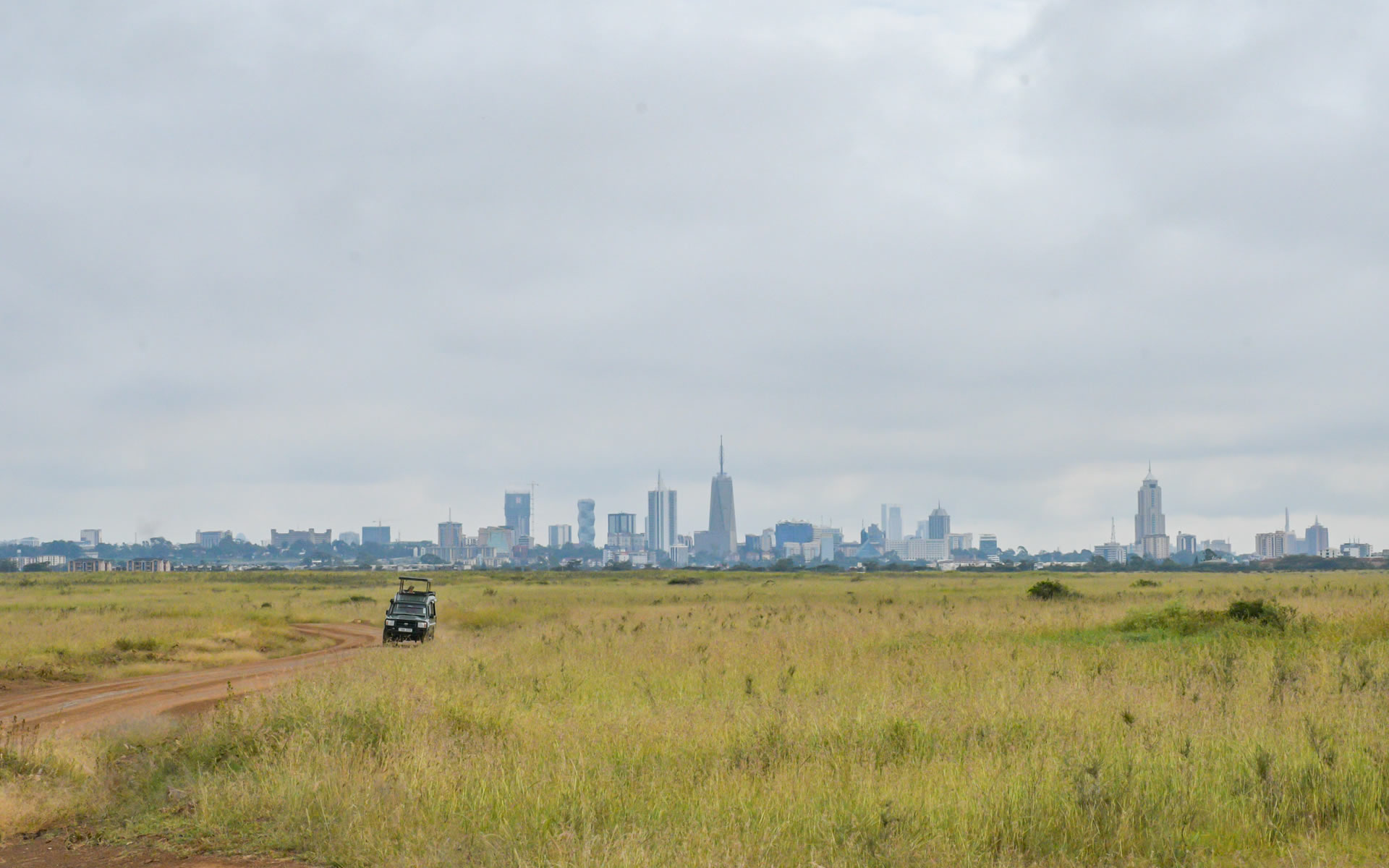
Situated just 7 miles from the center of Kenya’s capital city, Nairobi National Park is a pretty special phenomenon. Where else can you view critically endangered rhinos against a backdrop of downtown skyscrapers, or spot giraffes from your window seat as you land at the city’s international airport? For those about to embark on a tour of Kenya’s more famous safari destinations (think Amboseli, Tsavo, Samburu, and the mighty Maasai Mara), Nairobi National Park offers a worthwhile introduction to the country’s animal and birdlife. For those passing through the capital, the park is an opportunity to get a taste of the wild without ever leaving the city limits.
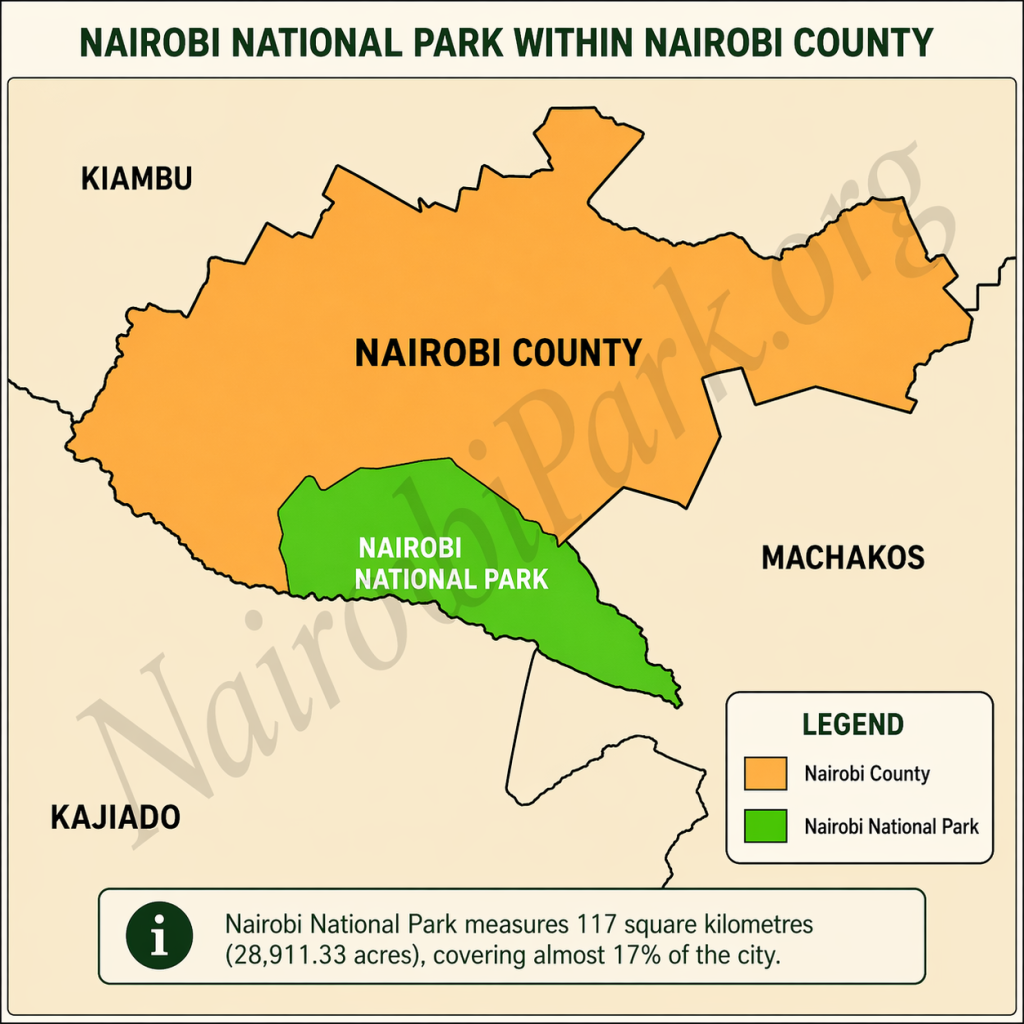
Geography highlights
Southern Nairobi location within Nairobi County
Urban-edge savannah setting
Mbagathi River as a key southern boundary feature
Fenced on most urban sides, but not ecologically complete on its own
Part of a larger ecosystem, not an isolated wildlife island
The Experience: Nairobi National Park
With a total area of just over 45 square miles, Nairobi National Park is one of the smallest national parks in Africa and yet it supports an astonishing variety of wildlife. It is home to four of the Big Five animals (with elephants being the notable exception), including black and white rhino. It is one of the most successful rhino sanctuaries in Kenya and one of only a few places left in the world where visitors are virtually guaranteed a sighting of the critically endangered eastern black rhino. In addition to lion and leopard, the park’s predators include cheetah and hyena while herbivores range from the Maasai giraffe to Coke’s hartebeest, eland, waterbuck, and impala.
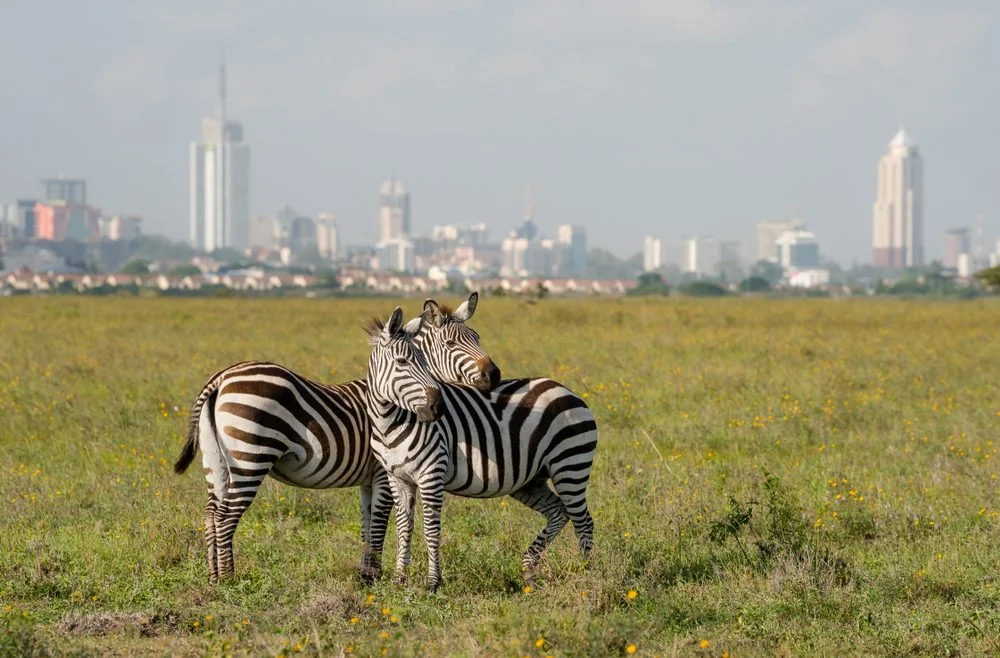
On the outskirts of Nairobi city, Nairobi National Park has fantastic wildlife and a backdrop of high-rise buildings. The park’s proximity to a large urban center is unique in Africa. Most big safari animals are present (except elephants), and sightings of big cats can be excellent. There is a small walk at the entrance leading through indigenous forest and several wildlife enclosures.
Wildlife
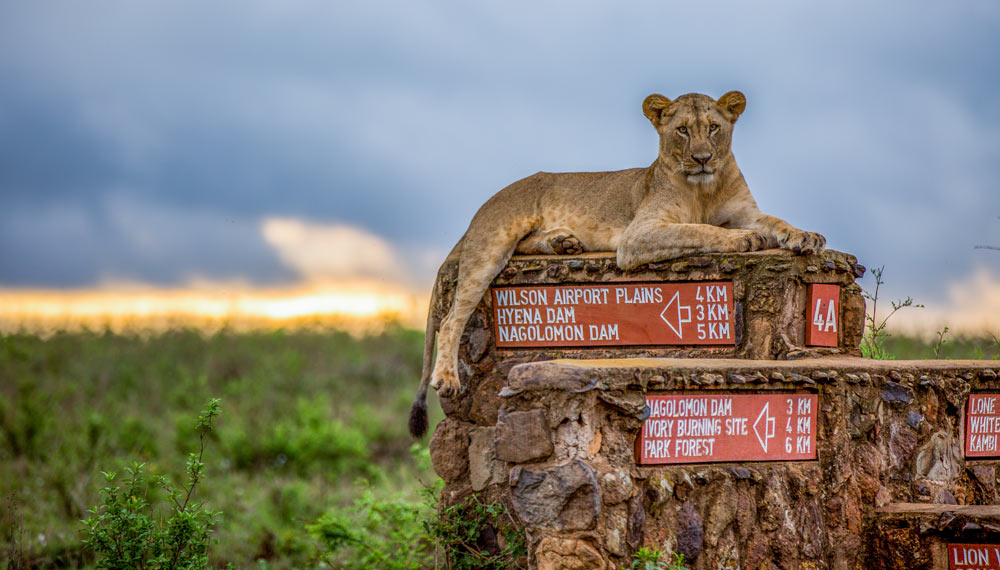
Nairobi National Park has a decent variety of wildlife. Aside from elephants, all of the Big Five are present. There is a good population of both black and white rhino and the latter are often seen grazing on the open plains. Leopards are shy, but lion, cheetah and hyena are regularly spotted. In July and August, a mini migration of wildebeest, zebra and gazelle crosses into the park from the surrounding areas.
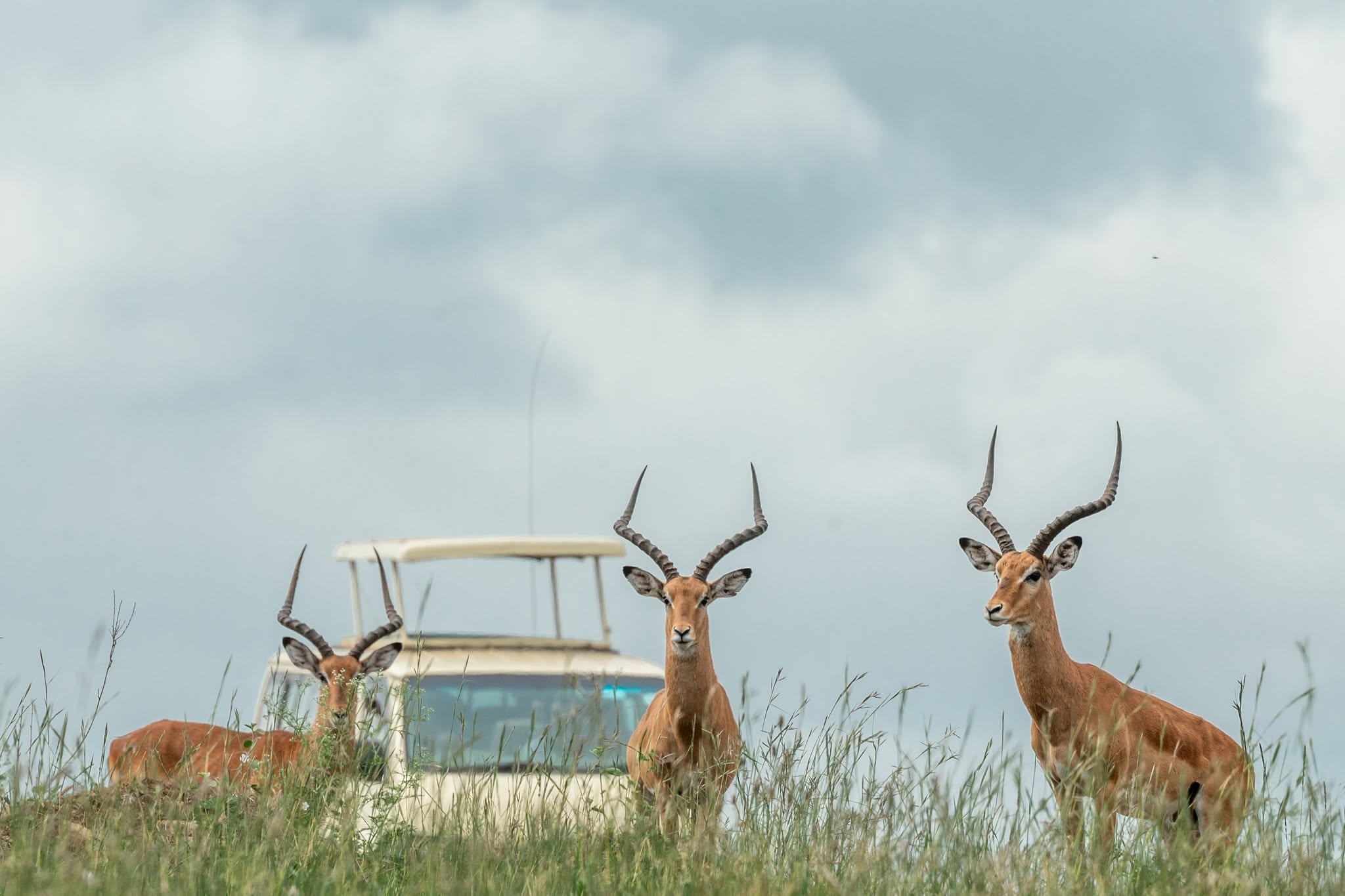
Lion, cheetah, Masai giraffe and buffalo are just some of the animals you can encounter on a half-day trip in Nairobi NP. It is also a good place to see some of the more unusual antelope species, including oribi, a grassland special. Coke's hartebeest is quite common, and if you are lucky, a herd of shy eland will come into view. Pairs of little Kirk's dik-dik can be spotted as well.
Birdlife
With nearly 500 bird species recorded, Nairobi National Park probably gives Kenya’s capital the longest bird list of all cities in the world. The park’s substantial area of undisturbed grassland is of great importance for species such as the restricted-range Jackson’s widowbird, which breeds here regularly after good rains. Other grassland birds include ostriches, secretary birds and bustards. Nairobi NP is a popular birding destination and it’s easy to book a full- or half-day guided birding trip at short notice.
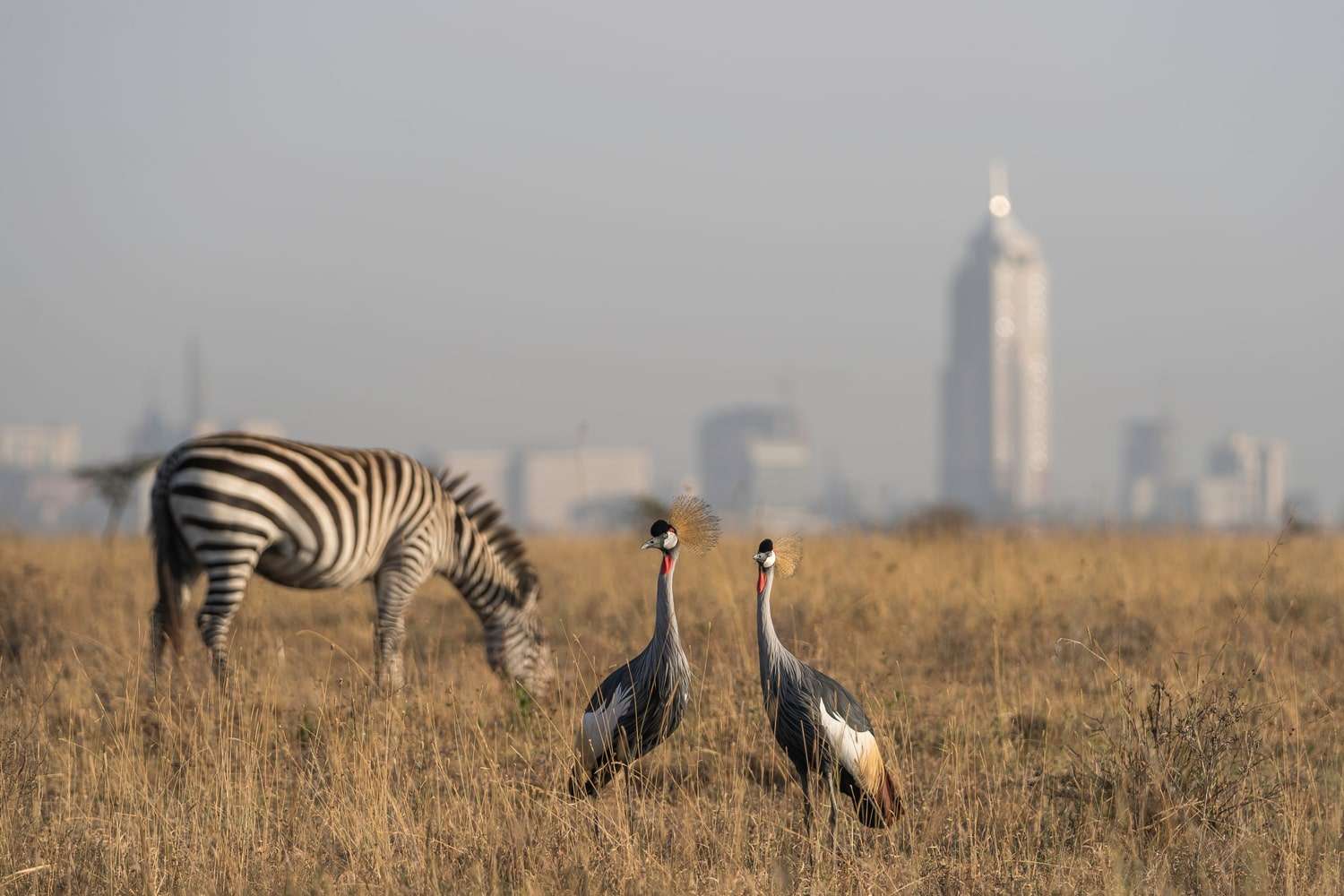
Nairobi NP offers good bird watching throughout the year, but the best time is from November to April when the migrants from Europe and North Africa are present. Many species are nesting at this time as it coincides with breeding season. The spectacular Jackson’s widowbird displays from March to May. Although good for birding, April tends to be very wet and is a less productive time for general wildlife viewing.
Rhino Sanctuary and the Meaning of Kifaru Ark
Nairobi National Park is one of Kenya’s most important rhino sanctuary landscapes and is often called Kifaru Ark because of the role it played during Kenya’s rhino crisis, when the eastern black rhino population declined by roughly 98%. The name captures the park’s function as a secure refuge where rhinos could be protected, monitored, bred, and safeguarded when the species was under severe pressure.
The park protects both eastern black rhino and southern white rhino, with its strongest rhino-protection role concentrated around Rhino Valley and the park’s closed conservation zones. Its sanctuary status is active, not symbolic: KWS reported in 2021 that rhino security in Nairobi National Park was organized through 25 monitoring blocks and a 79-member dedicated rhino protection team operating under 24-hour surveillance and monitoring.
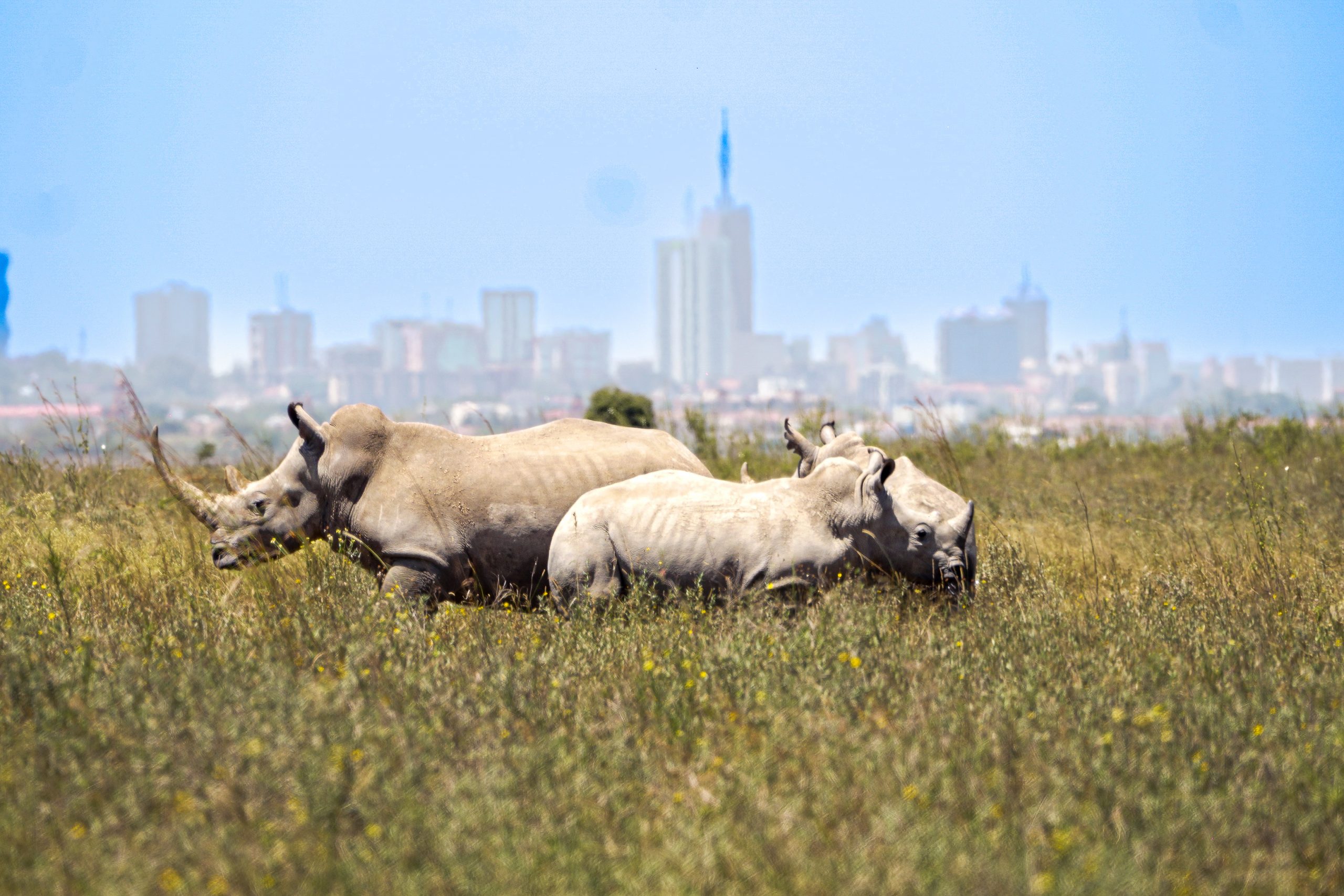
Nairobi National Park is a major refuge for the Eastern black rhino (Diceros bicornis michaeli). The images below show two individuals inside the park, highlighting Nairobi National Park’s role as both a visitor safari destination and a protected sanctuary for one of Africa’s most threatened rhino subspecies.
Conservation initiatives and management priorities
Nairobi National Park is managed through active conservation, not passive protection. The key priorities includes priorities around black rhino management, lion conservation, habitat management, water management, pollution monitoring, visitor experience, and stakeholder collaboration.
One of the most important initiatives is collaboration beyond park boundaries. The future of Nairobi National Park depends partly on conservation partnerships, landowner cooperation, and better management of the wider landscape south of the park.
Conservation & Community Involvement
Nairobi National Park is one of Kenya’s key black rhino conservation landscapes, managed by KWS through protection, monitoring, habitat management, and anti-poaching work.
Its long-term survival depends not only on management inside the park, but also on conserving the wider Athi-Kapiti ecosystem and supporting community conservancies that help maintain wildlife movement outside the boundary.
The park also depends on sustainable conservation finance, including tourism revenue, public funding, and partner support for security, research, infrastructure, and ecological management.
Friends of Nairobi National Park (FoNNaP) supports coexistence initiatives such as Lion Lights, which help reduce livestock predation and retaliatory killing in communities bordering the park.
The Athi-Kapiti Wildlife Conservancies Association (AKWCA) helps strengthen community-led conservation across the wider dispersal landscape that many park animals still depend on.
Sheldrick Wildlife Trust contributes through wildlife rescue, community outreach, and habitat protection in the broader Nairobi National Park landscape.
Nairobi Animal Orphanage rescues and rehabilitates injured, abandoned, or displaced wildlife and serves as an important conservation education facility.
Nairobi Safari Walk complements the park by offering an accessible, interpretation-focused wildlife experience that helps visitors understand Kenyan habitats and conservation.
Conservation Programs
Rhino conservation: Nairobi National Park is one of Kenya’s core sanctuary landscapes for both black and white rhinos, with KWS using it for protection, monitoring, and wider recovery management.
Masai giraffe and species monitoring: KWS’s management plan includes giraffe counts, habitat assessment, and research partnerships, showing the park’s conservation role extends beyond rhinos.
Anti-poaching and wildlife security: KWS leads ranger patrols, law enforcement, and species protection in a high-pressure urban-edge landscape where wildlife security remains essential.
Corridor reopening and protection: The future of the park depends heavily on restoring and safeguarding the Athi-Kapiti corridor, with government-backed implementation reported for the 2026/27 financial year.
Land lease conservation: Wildlife lease models supported through partners and World Bank-linked programs help keep habitat open in the dispersal area by compensating landowners for coexistence.
Athi-Kapiti community conservancies: The Athi-Kapiti Wildlife Conservancies Association now brings together 17 member conservancies, strengthening community-led conservation across the wider ecosystem beyond the park.
Green Line Project: Tree planting and boundary-buffer initiatives help reduce encroachment pressure while building public support for protecting the park edge.
Lion conflict mitigation: Programs such as Lion Lights help reduce livestock predation and retaliatory killing in communities bordering the park.
Research and ecological monitoring: Nairobi National Park relies on ongoing wildlife counts, habitat assessment, and adaptive management to respond to changing land use and ecological pressure.
Core institutions and why they matter
KWS – park management, species protection, ranger operations, visitor management, ecological monitoring, law enforcement, human-wildlife response
WRTI (Wildlife Research and Training Institute) – research support, wildlife science, monitoring frameworks, population studies, disease and ecological research, and scientific collaboration relevant to rhino and wider park management
CITES enforcement system – important in the broader control of illegal wildlife trade, especially for species such as rhinos whose survival is tied to strong international and national trade enforcement
KFS (Kenya Forest Service) – relevant where wider catchment, woodland, and landscape-level vegetation management intersect with ecological function beyond the park itself
NEMA – relevant to environmental impact assessment, compliance, and wider land-use decisions affecting the park’s ecological setting
County and national infrastructure/planning actors – critical because roads, rail, utility lines, urban expansion, and industrial projects shape the park’s external risk environment
Getting There
Nairobi National Park – Gates & Access Points
• Main Gate – The primary visitor entrance, conveniently located along Lang’ata Road and commonly used for standard park access.
• East Gate – An important access point, particularly convenient for visitors approaching from the Mombasa Road and eastern Nairobi side.
• Mbagathi Gate – Provides access to the Mbagathi area and is associated with visits to nearby conservation attractions, including the Sheldrick Wildlife Trust.
• Easy Accessibility – Nairobi National Park is among the most accessible safari destinations in Africa, allowing visitors to experience wildlife just a short drive from the heart of Kenya’s capital.
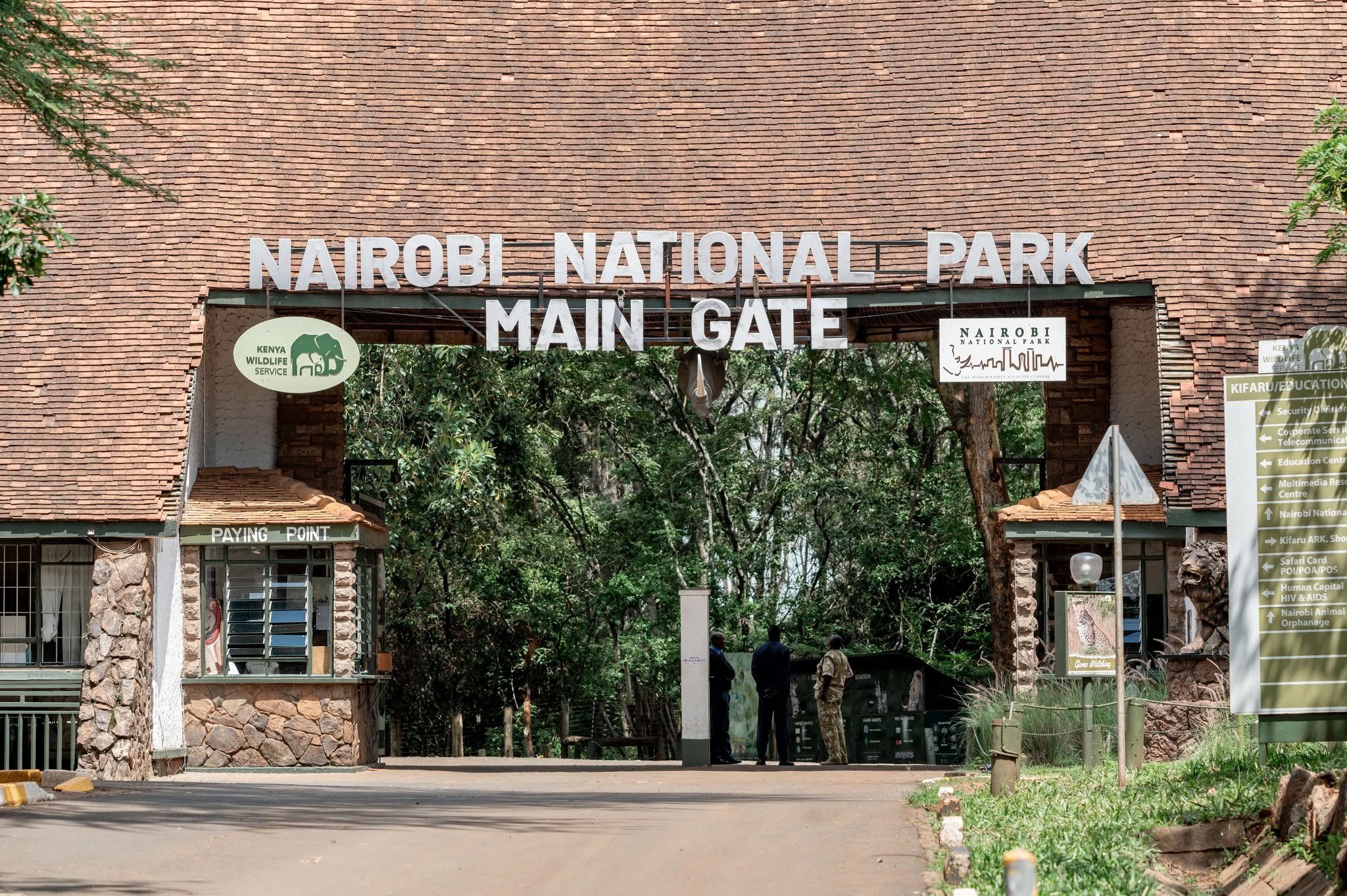
This accessibility makes Nairobi National Park especially attractive for:
Day trips from/near Nairobi
Layover or stopover safaris
First safaris in Kenya
Short wildlife excursions before longer circuits elsewhere
To learn how to get to Nairobi National Park from different Nairobi locations such as JKIA, Wilson Airport, Westlands, Karen, Nairobi CBD using a bus/matatu or using private means – self-drive or on a guided tour, read our guide on How to Get to Nairobi National Park.
The core Nairobi National Park experience is a game drive, but the park supports a broader nature-based visit than many first-time visitors expect. KWS lists game viewing, picnicking, camping, and related visitor activities on the official park page. Read this comprehensie guide on how to visit and planning your visit in this Nairobi National Park Visiting Guide.
To understand which gate is the most suitable and gate locations, read our guide on Nairobi National Park Gates.
Visitor Information
• Opening Hours: Daily, 6:00 AM – 6:00 PM
• Last Entry: 5:15 PM
• Main Park Rule: Remain inside your vehicle except at designated visitor sites.
• Speed Limit: Maximum 40 km/h within the park.
• Wildlife Safety: Animals roam freely throughout the park; do not walk alone or leave your vehicle outside approved areas.
• Respect Wildlife: Keep a safe distance, avoid disturbing animals, and follow your guide’s instructions.
• Best Experience: Early morning and late afternoon game drives offer excellent opportunities for wildlife viewing and photography.
Responsible visit reminders
Do not feed animals
Do not litter
Keep noise low
Respect speed limits
Remember that lions and buffaloes roam freely
Entry fees
Nairobi National Park uses official KWS conservation fees based on visitor category. The live KWS page and current KWS conservation fee schedule list the following rates for Nairobi National Park.
Because park fees are regulated and can change, visitors should always verify current rates on the official KWS platform before travel.
Top Activities
Visitor Highlights
• Game Drives – Search for lions, giraffes, zebras, buffaloes, leopards, and other wildlife.
• Rhino Viewing – Encounter black and white rhinos in their natural habitat.
• Birdwatching – Discover a wide variety of resident and migratory bird species.
• Wildlife Photography – Capture memorable wildlife moments with Nairobi’s skyline as a unique backdrop.
• Wetlands & Dams – Explore important water habitats that attract wildlife and birdlife.
• Ivory Burning Site – Learn about Kenya’s wildlife conservation history and efforts to combat the ivory trade.
• Conservation Experience – Discover how the park contributes to protecting Kenya’s wildlife and ecosystems.
• Combine Your Visit – Pair the park with Safari Walk, Animal Orphanage, Sheldrick Wildlife Trust, or Giraffe Centre for a full Nairobi wildlife experience.
The nearby Nairobi Safari Walk is especially useful for interpretation because KWS describes it as representing wetland, savannah, and forest ecosystems, with views over River Mokoyet and the rocky thickets linked to the wider Nairobi National Park landscape.
Major Landmarks and Points of Interest
Nairobi National Park is shaped not only by species and habitats, but also by places within the landscape that help visitors understand its ecological and historical character. Dams, viewpoints, picnic areas, river sections, and conservation monuments all contribute to how the park is experienced. These landmarks matter because they help turn a game drive into a more legible encounter with the park as a place.
Notable points within the park
• Ivory Burning Site & Monument – A significant conservation landmark commemorating Kenya’s commitment to protecting elephants.
• Hippo Pools Area – A scenic spot where visitors may observe hippos and other wildlife around the water.
• Hyena Dam – A popular water source that attracts wildlife, particularly during drier periods.
• Athi Dam – An important water feature offering opportunities for wildlife and bird viewing.
• Leopard Cliff – A scenic viewpoint offering beautiful views across the park and surrounding landscape.
• Observation & Picnic Points – Designated areas where visitors can pause, enjoy the scenery, and take in the park’s wildlife-rich surroundings.
• Woodland & Wetland Transition Areas – Diverse habitats that support different species of mammals, birds, and plant life.
How Nairobi National Park Compares to Other Kenyan Parks
Masai Mara – vast scale and predator spectacle
Nairobi National Park – accessibility, rhinos, education value, urban-edge conservation significance
Amboseli – elephants and Kilimanjaro scenery
Nairobi National Park – rhinos, bird diversity, city-edge savannah ecology
Lake Nakuru – fenced rhino sanctuary and wetland concentration
Nairobi National Park – open southern dispersal system, skyline contrast, wider corridor debate
Naivasha / Hell’s Gate – scenery and activity
Nairobi National Park – classic national park wildlife conservation close to the capital
Where to Stay
Accommodation Near Nairobi National Park
• The Emakoko – An exclusive luxury lodge offering an intimate safari experience close to the park.
• Ololo Safari Lodge – A peaceful countryside-style lodge with a strong nature and safari atmosphere, ideal for travelers seeking a relaxed stay.
• Emara Ole-Sereni – A stylish city hotel overlooking the park, combining urban comfort with wildlife views.
• Properties Near Main Access Corridors – A range of hotels and lodges located close to the park’s main entry routes, offering convenient access for early-morning and afternoon game drives.
Mid-Range / Practical Options – Mombasa Road
• Eka Hotel Nairobi – A convenient mid-range hotel along Mombasa Road, well positioned for the airport and Nairobi National Park.
• The Boma Nairobi – A comfortable option near the Mombasa Road corridor, suitable for travelers combining a Nairobi stay with a park visit.
• Hilton Garden Inn Nairobi Airport – A practical airport-area hotel on Mombasa Road, particularly convenient for travelers with early flights or short Nairobi stays.
• Emara Ole-Sereni – A stylish hotel on Mombasa Road with views toward Nairobi National Park, offering a blend of comfort and a safari atmosphere.
• Ole-Sereni Hotel – A well-positioned Mombasa Road hotel overlooking the park, making it a convenient base for combining city, airport, and safari activities.
Responsible Visiting and Conservation Value
A visit to Nairobi National Park is part of a conservation system. Tourism here is not separate from protection. It helps sustain visibility, revenue, management attention, and public support for a protected landscape under pressure. That is why responsible behaviour matters. The park is not a theme park or urban zoo. It is a living wildlife area where visitor conduct directly shapes the quality and ethics of the experience.
Park Etiquette & Safety
• Do Not Feed Wildlife – Feeding animals can alter their natural behavior and put both wildlife and visitors at risk.
• Keep the Park Clean – Do not litter; take all waste with you or dispose of it in designated bins.
• Keep Noise Low – Maintain a quiet environment to avoid disturbing wildlife and enhance the safari experience.
• Follow Park Rules – Observe speed limits, designated routes, and all instructions from park authorities and guides.
• Stay Alert – Wildlife moves freely within the park, including potentially dangerous animals, so remain inside your vehicle except in approved areas.
• Respect Conservation – Remember that Nairobi National Park is first and foremost a protected conservation area, with tourism designed to support and complement wildlife protection.
Why Nairobi National Park Still Matters
Nairobi National Park matters because it shows that conservation value is not measured only by remoteness or scale. A park can be compact, pressured, and urban-edge, yet still carry national and global importance if it protects threatened species, preserves habitat diversity, holds conservation memory, and keeps alive the possibility of coexistence between city growth and wildlife survival.
That is why Nairobi National Park deserves to be understood on its own terms. It is not merely a smaller substitute for Kenya’s larger safari ecosystems. It is a rhino stronghold, a bird-rich savannah mosaic, a historically important protected area, and one of the clearest places in Africa to see how conservation, tourism, and urban expansion meet in the same landscape.
What visitors should expect
Visitors should expect a compact but ecologically serious protected area. Nairobi National Park is not a substitute for Kenya’s largest wilderness parks. It is better understood as a high-yield urban-edge safari landscape where rhino conservation, birdlife, habitat diversity, hydrology, and ecosystem pressure are part of the visit.
How Visitors Can Support Conservation
• Visit Responsibly – Respect wildlife, habitats, and other visitors.
• Follow Park Regulations – Observe speed limits, designated routes, and safety guidelines.
• Learn About the Ecosystem – Understand the importance of the park and its surrounding landscapes.
• Choose Conservation-Informed Tours – Support operators who promote responsible and sustainable tourism.
• Support Wildlife Corridors – Learn about the importance of dispersal areas and ecological connectivity beyond the park boundaries.
• Support Habitat Restoration – Contribute to initiatives focused on restoring and protecting natural habitats.
• Promote Conservation Awareness – Share accurate information and encourage others to value and protect Nairobi’s unique wildlife heritage.
• Engage in Conservation Initiatives – Support community outreach, research, education, and other efforts that strengthen the park’s future.
What NairobiPark.org Stands For
NairobiPark.org is built around three commitments:
Conservation-first information – putting ecology and long-term protection before shallow marketing
Reliable visitor guidance – explaining how the park works and how to visit responsibly
Support for wider ecosystem protection – helping readers understand why corridors, dispersal lands, and ecological connectivity matter
The site is designed to help visitors:
Plan a visit well
Appreciate the park’s ecological richness
Understand its conservation history
Learn what threatens its future
Find ways to support long-term protection
NairobiPark.org celebrates the unique Nairobi National Park, where urban meets wilderness. Located just south of a bustling city, it offers an extraordinary safari experience with diverse wildlife such as lions and giraffes, all set against Nairobi’s skyline. As a sanctuary for conservation efforts, especially rhinos, the park’s distinct environment showcases Africa’s remarkable biodiversity nestled within an urban capital.
Why Nairobi National Park Matters
Nairobi National Park matters because it is:
A black rhino sanctuary
A city-edge savannah ecosystem
A birding landscape of major value
A wildlife refuge under real pressure
A living conservation classroom
A test case for whether ecosystems can survive beside a rapidly growing city
Welcome to Nairobi National Park
Nairobi National Park is:
A rhino sanctuary
A savannah ecosystem beside a capital city
A key part of the wider Kitengela–Athi-Kapiti landscape
A major birding destination
A frontline conservation landscape in modern Kenya
Summary
Why Nairobi National Park Stands Out
• Wildlife – Home to rhinos, lions, giraffes, buffaloes, cheetahs, and an impressive variety of birdlife.
• Accessibility – One of the most accessible true safari experiences in Kenya, located just minutes from Nairobi’s city centre.
• Conservation – An important stronghold for black rhino conservation, wildlife corridors, and management of an ecosystem surrounded by a rapidly growing city.
• Birding – A diverse range of habitats supports 500+ bird species, making the park an excellent destination for birdwatchers.
• Scenic Identity – Experience classic African savannah wildlife with Nairobi’s skyline in the background a view found in very few places.
• Educational Value – Offers a unique opportunity to understand wildlife conservation, habitat pressure, urban expansion, and human-wildlife coexistence in a real-world setting.